RRB Group D Recruitment 2026 – 32,000+ Vacancies | Track Maintainer, Helper | Salary ,28,000
Quick Overview
- Vacancies: 32,438
- Salary: ,25,000 – ,32,000/mo
- Qualification: 10th + ITI (preferred)
- Age Limit: 18 – 36 Yrs
- Exam: CBT + PET + DV + Medical
What is RRB Group D?
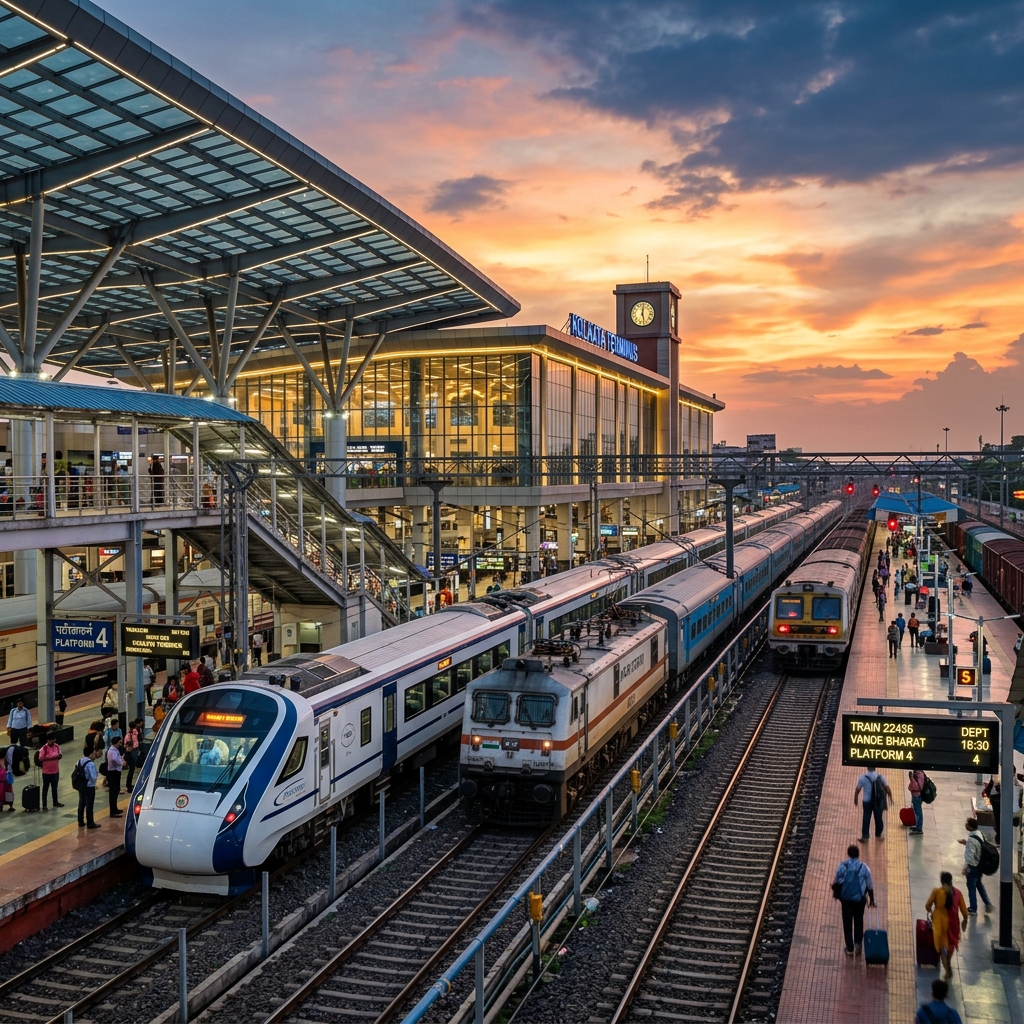
RRB Group D refers to the lowest rung of railway recruitment under the Railway Recruitment Boards (RRBs). However, "lowest rung" does not mean less important - in fact, Group D employees form the operational backbone of Indian Railways. Posts under Group D include Track Maintainer Grade IV (formerly Gangman), Helper in Engineering/Signal & Telecommunication/Electrical departments, Hospital Attendant, Gateman, Pointsman, Porter, and various other supporting roles. These employees ensure that the 13,000 km of daily train operations across India run safely, on time, and efficiently. Without Group D workers maintaining tracks, signals, and stations, Indian Railways would simply not function.
Vacancy Breakdown 2026
The 32,438 Group D vacancies for 2026 are distributed across all 21 Railway Recruitment Boards. The largest number of vacancies is in Track Maintainer Grade IV (approximately 15,000+ posts), followed by Helper in Electrical (5,000+), Helper in Engineering (4,000+), Helper in S&T (3,500+), Gateman (2,000+), Pointsman (2,000+), and Hospital Attendant/Other posts (500+). Zone-wise, South Central Railway and Central Railway typically have the highest vacancy counts due to their extensive network.
Eligibility Criteria
Educational Qualification: Candidates must have passed Class 10 (Matriculation/SSLC) from any recognized board. Additionally, holding an ITI certificate from an NCVT/SCVT-recognized institute in a relevant trade is preferred and gives candidates an advantage during the selection process, though it is not mandatory for all posts. For Track Maintainer posts, ITI in Civil Engineering (Track) is specifically preferred.
Age Limit: 18 to 36 years as on the closing date. Age relaxation: SC/ST (5 years), OBC-NCL (3 years), PwD (10 years), Ex-Servicemen (as per Govt. norms).
Pay Scale and Benefits
Group D posts are in Level 1 of the 7th CPC Pay Matrix with a starting basic pay of ,18,000 per month. After adding all allowances including DA (currently ~46%), HRA (based on city: 8–27%), TA, Night Duty Allowance (for Gateman/Pointsman), and other perks, the gross monthly in-hand salary ranges from ,25,000 to ,32,000. Employees also receive free medical care at Railway hospitals for themselves and dependents, concessional railway passes, and access to Railway welfare amenities such as schools, hospitals, and housing colonies. Group D employees are also eligible for promotion to Group C through Limited Departmental Competitive Examinations after completing 3 years of service.
Selection Process
Computer Based Test (CBT): A single online exam of 100 questions to be completed in 90 minutes. It covers Mathematics (25 questions), General Intelligence & Reasoning (30 questions), General Science (25 questions), and General Awareness on Current Affairs (20 questions). The difficulty level is equivalent to Class 10. Minimum qualifying marks: 40% for UR/EWS, 30% for OBC, 30% for SC/ST. Negative marking: 1/3 for each wrong answer.
Physical Efficiency Test (PET): For male candidates: Lift and carry a weight of 35 kg for 100 meters in 2 minutes without putting it down. For female candidates: Lift and carry a weight of 20 kg for 100 meters in 2 minutes. This test is qualifying in nature and does not carry marks but must be passed to proceed.
Document Verification: Original certificates are verified for shortlisted candidates.
Medical Examination: Standard medical fitness test including vision, hearing, and general health. Grade B-2 medical standard applies for most Group D posts.
Preparation Tips
Since the exam is Class 10 standard, NCERT textbooks for Science (Physics, Chemistry, Biology) and Mathematics are your best study materials. For General Awareness, follow Railway-related current affairs (new train launches, station upgrades, speed records, new lines commissioned). Use NCERT Science chapters on Force, Motion, Electricity, and Chemical Reactions for General Science. For Reasoning, practice puzzles, coding-decoding, and series completion daily. Solve at least 2 full Group D mock tests every week in the 2 months before the exam. The key differentiator in Group D is speed - 100 questions in 90 minutes means you have less than 54 seconds per question. Practice timed tests extensively.
For the PET, start training at least 3 months early. The 35 kg carry task (for males) requires functional strength and endurance. Practice with sandbags or cement bags to simulate the actual test. Squats, deadlifts, and farmer's carries at a gym or with improvised equipment will help significantly. Don't take the PET lightly - hundreds of thousands of candidates clear the CBT but fail here due to inadequate preparation.
Life in Group D Railway Service
Working as a Group D Railway employee offers an extraordinary combination of job security, government benefits, and social respect. Track Maintainers work in outdoor conditions maintaining the permanent way (tracks, bridges, culverts) and have a deep sense of pride in keeping India's railway tracks safe. Gatemen and Pointsmen work in shift duties at stations and level crossings, often in their home districts. Housing colonies, schools, and hospital facilities within Railway townships provide an excellent quality of life even in smaller cities. Post-retirement, employees receive a pension under NPS and lifetime railway passes. For candidates who passed 10th and want a government job that provides complete life security - RRB Group D is a golden opportunity. Apply with all seriousness and prepare thoroughly to beat the competition of 1.2 crore+ expected applicants.