Tata Motors Executive Trainee Recruitment 2026 – BE/BTech | Salary ,8.5 LPA
Quick Overview
- Vacancies: 250+
- CTC: ,8.5 Lakhs/Annum
- Qualification: BE/BTech (Mech/Elec/Auto)
- Age Limit: Maximum 26 Yrs
- Selection: Aptitude Test + Tech Interview
The Legacy and Future of Tata Motors
Tata Motors Limited, a USD 42 billion organization and part of the Tata Group, is India's largest and most diversified automobile manufacturer. The company is a global powerhouse with a portfolio covering a wide range of cars, sports utility vehicles (SUVs), trucks, buses, and defense vehicles. From the commercial dominance of the Tata Prima and Signa trucks to the massive consumer success of the Nexon, Harrier, and Safari, Tata Motors is a household name in India.
More importantly, Tata Motors is currently leading India's electric vehicle (EV) revolution. With Tata Passenger Electric Mobility Ltd. (TPEML) securing dominant market share through models like the Nexon EV, Tiago EV, and Punch EV, the company is investing billions into sustainable mobility, battery technology, and charging infrastructure. Joining Tata Motors as an Executive Trainee means becoming a foundational part of this historic transition from internal combustion engines (ICE) to electric mobility.
Who Can Apply? Eligibility Criteria
The Executive Trainee (ET) program at Tata Motors is designed to recruit the brightest young engineering minds from across the country. The eligibility criteria are strict to ensure only top-tier talent is onboarded.
Educational Qualification: Candidates must possess a full-time B.E. or B.Tech degree from an AICTE/UGC recognized university or institute. The preferred branches include Mechanical, Automobile, Electrical, Electronics & Communication, Mechatronics, and Production Engineering. A minimum aggregate of 65% (or equivalent CGPA) across all semesters with no active backlogs at the time of joining is mandatory.
Age Limit: The maximum age limit for applying is generally 26 years. This program is aimed specifically at fresh graduates or those with less than two years of work experience.
Additional Skills: While not officially listed as mandatory, candidates with certified knowledge in CAD/CAM software (like CATIA, SolidWorks), Matlab/Simulink, Python, or knowledge of Battery Management Systems (BMS) for EV roles are given strong preference during the interview stage.
Compensation and Benefits: The Tata Advantage
Tata Motors offers a highly competitive compensation package for fresh engineers, but the true value lies in the Tata ecosystem's benefits and long-term career security.
Starting Salary (CTC): The Cost to Company (CTC) for an Executive Trainee is approximately ,8.5 Lakhs per annum. During the initial 6-month to 1-year training period, trainees receive a fixed stipend. Upon successful confirmation as a Senior Manager (L5 Grade), the salary structure is formalized with Basic Pay, HRA, Conveyance Allowance, and a Performance-Linked Bonus (PLB) which constitutes a significant chunk of the variable pay.
Perks and Allowances: Working for a Tata Group company comes with legendary employee welfare benefits. This includes comprehensive medical insurance for the employee and dependents (through Tata AIG), subsidized meals at the factory canteens, provident fund, gratuity, and heavily discounted rates on Tata vehicles under the employee purchase scheme. Furthermore, employees get discounts across other Tata Group consumer brands (like Titan, Croma, Taj Hotels, and Westside).
The Selection Process: Rigorous and Multi-Stage
Tata Motors conducts its recruitment through campus placements at premier institutes (IITs, NITs) as well as off-campus national drives. The off-campus selection process involves three main stages:
Stage 1: Online Cognitive and Technical Assessment
This is an elimination round conducted on platforms like TCS iON or AMCAT. It tests Quantitative Aptitude, Logical Reasoning, Verbal Ability, and core Technical Knowledge related to your engineering branch. For instance, Mechanical engineers will face questions on thermodynamics, strength of materials, fluid mechanics, and IC engines. Electrical engineers will be tested on control systems, power electronics, and electrical machines.
Stage 2: Technical Interview
Candidates who clear the online test are invited for a technical interview. The panel usually consists of senior engineering managers from Tata Motors. This interview is highly practical. You will be grilled on your final year engineering project, your understanding of automotive systems (like transmission, suspension, or EV powertrains), and basic engineering first principles. The panel looks for problem-solving abilities and a genuine passion for the automotive sector.
Stage 3: HR Interview
The final round assesses your cultural fit within the Tata ecosystem. Questions will revolve around your leadership experiences, ability to work in teams, ethical dilemmas, and long-term career aspirations. Tata Motors places a massive premium on ethics and integrity, aligning with the core values of the Tata Group.
Career Progression and Life at Tata Motors
Upon selection, Executive Trainees undergo a structured induction program. You will spend your first few months rotating through different departments—Manufacturing, Quality, R&D (Engineering Research Centre), Supply Chain, and Sales—before being assigned a specific role based on business requirements and your aptitude.
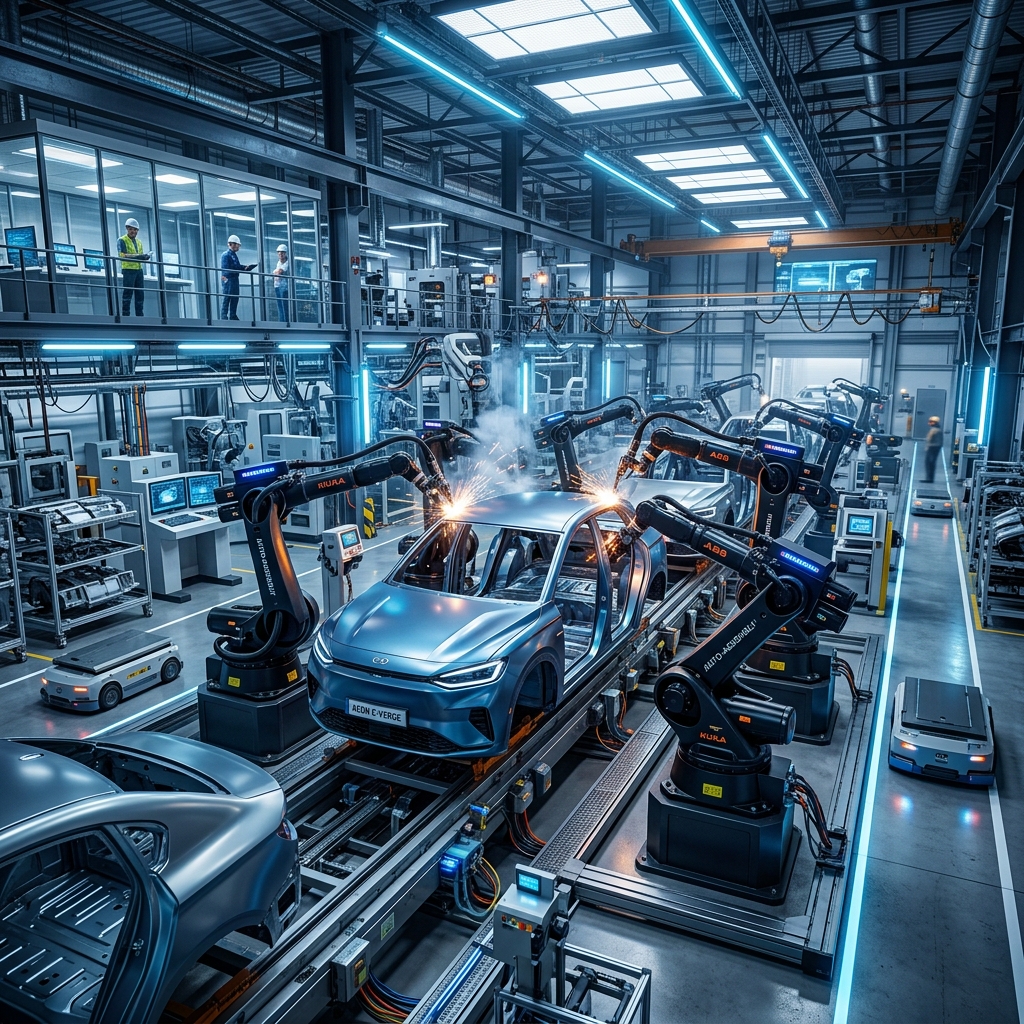
Engineers posted at the Engineering Research Centre (ERC) in Pune will work on cutting-edge product development, vehicle testing, and EV technology. Those posted in manufacturing plants (like Pune, Jamshedpur, Sanand, or Lucknow) will handle shop-floor operations, production planning, and lean manufacturing implementation.
Career progression is steady and performance-driven. An Executive Trainee moves up to Manager, Senior Manager, Divisional Manager, and eventually General Manager. Tata Motors also sponsors higher education (like an Executive MBA) for top-performing employees through tie-ups with premier institutes. If you want to build cars that India drives, there is no better starting point than Tata Motors.